Friday, February 8, 2019

Tech Policy

Hi everyone! 

I hope you all were able to submit your position papers. If you submitted on time you should get your graded copy back by February 25th. 

I just wanted to go over the technology policy for our committee. We will only be an UNMOD tech committee. That means that you can only use laptops (or phones if you do not have a laptop) during unmoderated caucus. Make sure plan accordingly and print out any materials you need ahead of time. 

If you have any issues, accommodations questions, contact me at mmclean@bmun.org. 

Can not wait to see you all! 
Michelle 

Enjoy these parks and recreation gems. 

Wednesday, February 6, 2019

Growing Rates of Foreign Aid in MDCs

Hello all - Ryan here! This post will look at the growing tendency and intensity of MDCs' foreign aid, and how such aid may place one country's interest before that of another. One of the hallmarks of developed nations' foreign policy includes a large sum of their budget being allocated to international development, where the purpose of such may only act to increase influence in an area. It is important to realize the constancy and intent of this sector of foreign policy, and the implications it holds on LDCs and their attempts towards economic autonomy.

In watching the recent State of the Union, I saw President Trump discuss at length the international relationship between the United States and Mexico, and wondered what other means of global communication our country has offered this past year. I found that the president this summer held back on limiting the US Agency for International Development's (USAID) 2019 budget despite calls from officials to do so (and rather increased the budget by 4%). This budget, consisting of $39.3 billion, is allocated for the purpose of, among others, "[creating] markets for U.S. exports and opportunities for U.S. investors." The deliberate intent of American market growth questions the accountability of foreign aid to make its main purpose that of benefitting its recipient, and implies that other foreign aid projects may also overlook this seemingly basic goal.

It should be known, then, that the intent of these projects from any nation could hold the interests of more dominant states first, with little sign of diminishing influence. The question, then, if the intensity of foreign aid shows no signs of decreasing, is how this aid can be amicably used to provide assistance to a country while also benefitting a domestically. As delegates, it is clearly evident one should follow country policy of maintaining some profit from international aid, while also ensuring that others are given this aid with little setback or dependency. You should look to find a balanced solution to the many examples of this issue, and realize that a delicate equilibrium exists in the intent and effect of these projects.

To learn more about this intent of international aid, use this example from USAID's Budget Analysis for 2019 found here:
https://www.usaid.gov/results-and-data/budget-spending

And, if you have not done so, I highly recommend watching the president's 2019 State of the Union, found here:
https://www.whitehouse.gov/sotu/

Monday, February 4, 2019

Perspectives on "brain drain"

Hey, delegates!

I stumbled upon this article from the Economist that discussed the theory of brain drain. I found this comment by Elnathan John important,
“A lot of the argument around ‘skilled migrants’ is classist because it makes a distinction between the human value of skilled people and that of ‘unskilled’ migrants, whatever that means”.
I thought this was an interesting perspective, one that could be kept in mind when we frame our discourse regarding this topic. Should human value be placed on “skill”? What is “skill”?

Also, I wanted to discuss an article put out by the Center for Global Development discussing the benefits of “brain drain” from a home country. It emphasizes how emigration can benefit these countries through remittances—the flow of money from a foreign nation to a home nation—and through the potential return of emigrants. For this return of emigrants to consistently take place throughout generations, however, certain conditions must be put in place. This article outlines China’s policies directed to incentive emigrants to return home, describing how the Chinese government has set up recruitment firms to attract emigrants who have studied or worked abroad. According to the authors of this article, China has benefitted from this policy as the economy has further developed. It points out, though, that at the onset of this program, China already had a rapidly growing economy and relatively stable political system. Thus, returning as an emigrant is probably contingent on whether the home country has a level of political and economic security. These authors argue that migration and the flight of human capital is just a step in the development process and should not always be critiqued.

This topic has no clear answer. Is it fair to ask people to stay in a nation where their wellbeing could be threatened just because they are seen as an economic asset? How can we reconcile our vision for equality among nations and the rights of individuals? In committee, we ask you to propose solutions along the lines of your country policy. But, as you are doing your research, take time for yourself to think about the human-level impact about the topics we are discussing. According to certain country policies, it may not be appropriate to suggest some ideas in the scope of committee, but they are important to think about as they relate to the real world. In subjects like international relations and economics, sometimes we tend to minimize the experience of the individual and focus on the macro-scale. Statistics and trends about GDP and growth can tell us a lot, but they don’t necessarily tell us about levels of well-being, health, or inequality.

Saturday, February 2, 2019

Position Paper Guidelines

Hello everyone!  


With the first paper deadline coming up, I wanted to let you know of guidelines for the paper itself. Position Papers are due on February 3rd to be considered for the Research Award, and February 10th to be considered for any committee award. If you do not turn it in by this time you will be unable to receive a committee award. 

A full guide is linked here for your convenience. Overall, at BMUN we grade based on research and specifics so the best papers will cite their sources and include a lot of information within the solutions section. This section of the paper should be the most important; without specifics solutions will be hard to live in committee. 


The sections are weighted accordingly. Use the percentages to determine how much you write for each section: 
Sections: 
The Position Paper, ultimately, is your opportunity to develop a deep understanding of the issues presented in the committee, and thus will go a long way in preparing you for direct interaction and debate with other delegates.
Happy researching! Excited to read your papers :)


I. Past and Current International Action (20%) (~2/3 page) 
II. Country Policy (20%) (~2/3 page) 
III. Proposed Solutions (40%) (~1 ¼ page) 
IV. Response to Questions to Consider (15%) (~ 1/2 page) 
V. Works Cited (in MLA), as well as in-text citations 


Michelle


Wednesday, January 30, 2019

Flight of Human Capital: Reverse Brain Drain?

Hello all,

Today we will be talking about a potential example of human capital flight that doesn't match the typical cases we cite in the topic synopsis, and how it may tie into the phenomenon we touched upon called "reverse brain drain." Experts and media are increasingly recognizing the effects of President Trump's new restrictive immigration and visa policies and its potential effect on skilled talent.

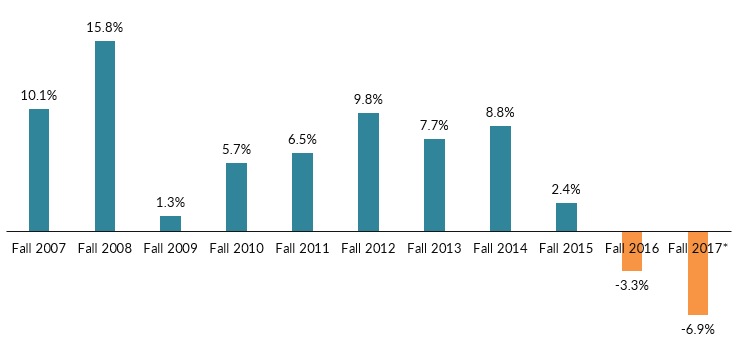
The United States has long been a desirable destination for the world's top students. US higher education has dominated top college rankings for decades, and American scientists are represented highly in academic and scientific recognition, such as Nobel Prizes. International talent from around the world flocks to the US, and the number of new international student enrollment has consistently increased every year - that is, until fall of 2016. It dropped once again next year, and early data looks to support this trend for the upcoming fall of 2018.


While it is likely that there are multiple factors behind this decrease, economists like Anne Kreuger criticize Trump's policies as harming one of the United States' largest major export industries: its education. Signs of talent deficit are already beginning to rise in innovational areas like Silicon Valley.

So what about the current foreign studying in the United States who may be unable to obtain a work visa and consequently will return back to their home countries?

This is a good example of "reverse brain drain," a phenomenon that some economists use to justify that brain drain ends up a net benefit for the origin nation. When highly skilled workers return to their home country, they now have a much more developed skillset and experience to use to start businesses, teach at universities, etc. In fact, some of the world's leading nations have previously adopted policies to specifically encourage this reverse migration, and could be an interesting starting point for some ideas to address our second topic.

Here are some links to information mentioned above!
Anne Kreuger on Trump Brain Drain:
https://www.project-syndicate.org/commentary/trump-foreign-students-us-universities-by-anne-krueger-2019-01
International Students in the US:
https://www.migrationpolicy.org/article/international-students-united-states
Reversing the Brain Drain in Pakistan:
https://ssir.org/articles/entry/reverse_the_brain_drain

Monday, January 28, 2019

Transparency in Foreign Aid


Hello, everybody! I am going to write about ways in which foreign aid can be effective in strengthening the long-term economies of nations that receive aid. Some of the primary issues with foreign aid arise from the fact that it is hard to regulate where foreign aid money ends up. This does not necessarily mean that the governments of nations receiving aid are misusing funds but that they are not allocating aid to sectors of the economy in which would bring the highest rates of return if invested in. Providing aid to some sectors may fuel the aid-dependency cycle, while investing aid in other sectors may reduce aid dependency in the future.

Investment in specific sectors, such as education or agriculture, greatly benefit a nation’s economy and can reduce future reliance on aid. These investments have to be targeted—you cannot just dedicate a sum of money to schools or farmers with a vague goal in mind. Policy makers have to devise specific plans that increase the quality of education, whether that means investing in early childhood education or specifically addressing regions of a country where literacy rates are low. In terms of agriculture, this could mean investing in sustainable agricultural practices, such as those that promote long-term fertility. Thus, governments receiving foreign aid can invest in specific sectors and policies that will strengthen their economies and eliminate the need to receive large sums of foreign aid.

The question is, how can donor nations ensure that the aid they give will be used effectively to reduce aid dependency in the future? The Brookings Institution and Publish What You Fund developed the Aid Transparency Index in 2018, which publicly provides aid data from around the world. By publishing where aid comes from, where it is going, and how it is used allows for research institutions and donor nations to assess what type of aid is most effective and if governments are being transparent in how they are dispersing aid. It also allows researchers and policy makers to analyze this data and determine what types of aid have been most successful in generating the economic results they desire to achieve.

To read more about how greater accountability and transparency regarding foreign aid can make the effects of aid more efficient, read these web pages and articles:

http://www.publishwhatyoufund.org/why-it-matters/what-you-can-do/

https://www.global-economic-symposium.org/knowledgebase/the-global-economy/effective-investments-in-education

https://www.brookings.edu/blog/up-front/2018/06/21/how-better-aid-transparency-will-help-tackle-global-development-challenges/

Friday, January 25, 2019

Delegate Posting Expectations

Hi everyone! 

As we near our first deadline for position paper submissions (this Sunday!)I wanted to let you know what we expect from this blog as your chairs. 

This blog is meant to be a way to update you on the nature of our topics in current events and allow you all to interact with each other before the conference. While you do not need to respond to all posts (and I encourage you not to), feel free to engage with the material in any way that works for you. 

Each week we will post once about each topic and we encourage you to read the posts as a way to catch up on the current events for these topics. While this is not an exhaustive way to continue to prepare for committee, this could be a great way for you to interact with your fellow delegates before the conference starts. 

We would love to see each delegation respond to one post. This is by no means a requirement but we would love to see what you all have to say. 

We look forward to reading what you write. Happy typing! 
Michelle